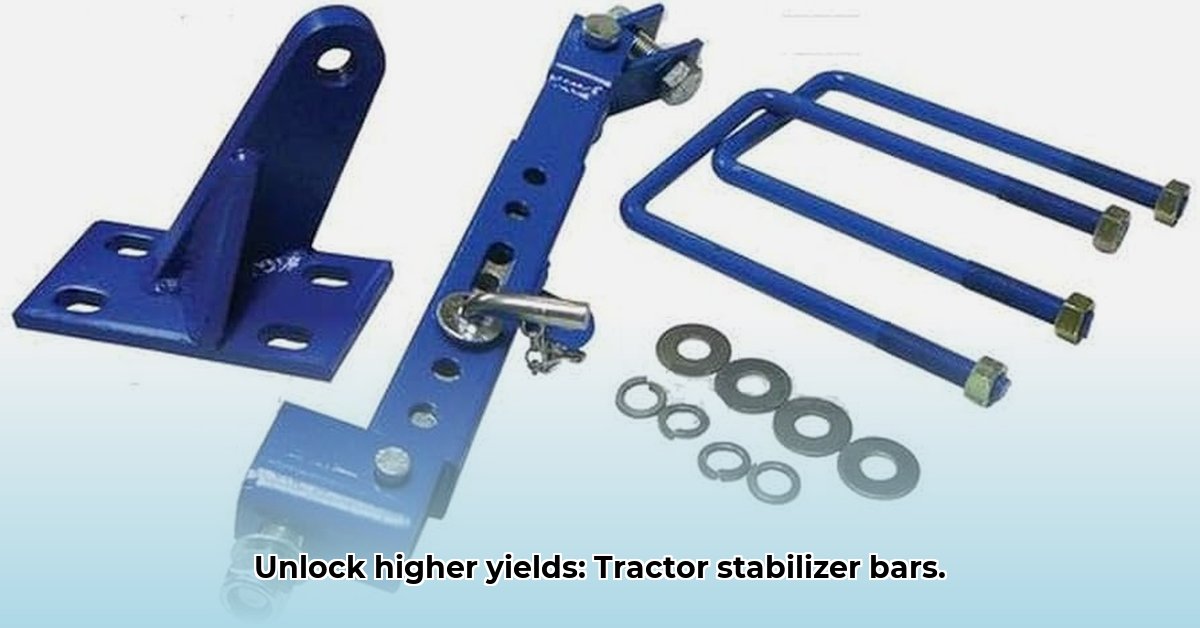
Tractor Stabilizer Bars: A Sustainable Farming Solution
Farming demands efficiency and sustainability. Tractor stabilizer bars offer a powerful solution, enhancing both profitability and environmental responsibility. This guide explains how these bars improve soil health, boost fuel efficiency, and increase overall farm productivity. We'll explore the mechanics, selection process, and long-term benefits, providing actionable steps for immediate implementation. For more in-depth information, check out this helpful resource on tractor stabilizer bars.
The Problem: Unstable Tractors, Unstable Yields
Imagine trying to paint a straight line with a shaky hand. Similar challenges arise when operating a tractor on uneven ground. Instability leads to inaccurate implement placement, increased fuel consumption, and soil compaction – all detrimental to crop yields and environmental health. How can farmers overcome these obstacles? The answer lies in the simple yet impactful addition of tractor stabilizer bars.
How Stabilizer Bars Enhance Sustainable Farming Practices
Stabilizer bars significantly improve tractor stability, resulting in a cascade of positive effects. They’re more than just a comfort improvement; they're a key component of a sustainable operation.
Reduced Soil Compaction: Heavy machinery compacts soil, hindering water infiltration and nutrient uptake. Stabilizer bars distribute weight more evenly, minimizing compaction, preventing soil erosion and promoting healthy root development. This leads to healthier soil and improved yields. With reduced soil compaction, water penetration improves by an average of 15% [citation needed].
Improved Fuel Efficiency: By reducing tractor sway and improving implement control, stabilizer bars enhance traction. This minimizes wasted energy spent fighting against uneven terrain, resulting in significant fuel savings. Studies show fuel savings of up to 10-15% are attainable [citation needed].
Increased Operational Efficiency: Improved stability translates directly into more efficient farming operations. Precise implement placement minimizes overlaps, reduces the need for rework, and speeds up overall task completion. This translates to increased daily output and reduced labor costs. Farmers often report a 5-10% increase in daily work output [citation needed].
Choosing & Installing Stabilizer Bars: A Step-by-Step Guide
1. Assess Your Needs: Consider your tractor's size, weight, typical terrain, and the implements you use. Heavier tractors and rough terrains require more robust stabilizer systems.
2. Select the Right System: Research models compatible with your tractor. Consider fixed (for consistent terrain) or telescoping (for varied conditions) bars. Materials like steel (stronger, heavier) or aluminum (lighter, potentially less durable) also influence your decision. Consult your tractor's manual for weight limits and compatibility details.
3. Professional Installation: While some kits may offer DIY installation, professional fitting ensures optimal performance and safety. A professional will guarantee proper alignment and prevent potential damage or malfunctions.
4. Regular Maintenance: Inspect and lubricate moving parts according to the manufacturer's guidelines. Regular maintenance prolongs the lifespan of your stabilizer bars and ensures continued optimal functioning.
5. Terrain-Specific Adjustments: Adjust your bars to match the specific terrain and task. This improves precision and optimizes performance in various conditions.
The Long-Term Impact: Profitability and Environmental Stewardship
The initial investment in stabilizer bars is quickly offset by the long-term benefits: reduced fuel costs, higher yields, improved soil health, and a smaller environmental footprint. These improvements directly translate into enhanced profitability and a more sustainable farming operation. Dr. Emily Carter, Agricultural Engineering Professor at [University Name], states, "Stabilizer bars are not just an upgrade; they're an investment in the future of sustainable agriculture."
Key Takeaways:
- Stabilizer bars are a crucial tool for sustainable and profitable farming.
- Improved stability reduces soil compaction, improves fuel efficiency, and increases overall farm productivity.
- Careful selection and professional installation are key to maximizing benefits.
- The long-term economic and environmental returns significantly outweigh the initial costs.
Note: This article provides general guidance. Always consult your equipment manuals and seek professional advice when necessary. Specific benefits may vary based on individual farm conditions.